
It is very important for dog owners to try to evaluate what their pet is trying to tell them. It is also important to be able to “read” the body language of a strange dog that you may happen upon, or that might wander into your yard. Many owners that have had dogs for awhile can discern if their barking dog is warning them of a serious issue or if he is just answering a call from down the street. These owners have learned the pitch and type of bark to expect in different situations.
If your dog could communicate with you verbally it would be wonderful, but learning their barks and body language is the next best thing and can really be helpful in understanding your dog’s mood, behavior, and sometimes health status.
The Confident Dog
When your dog is relaxed and confident you should notice slightly perked ears, bright, interested eyes, if the mouth is open it is relaxed and may have the tongue partly hanging out. The tail may wag slowly, in a relaxed manner, and the body and musculature will be relaxed with no signs of stress.
The Happy Dog
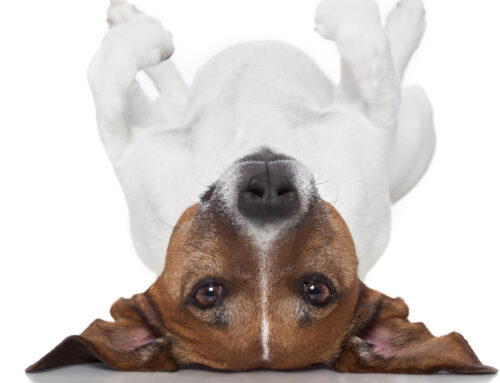
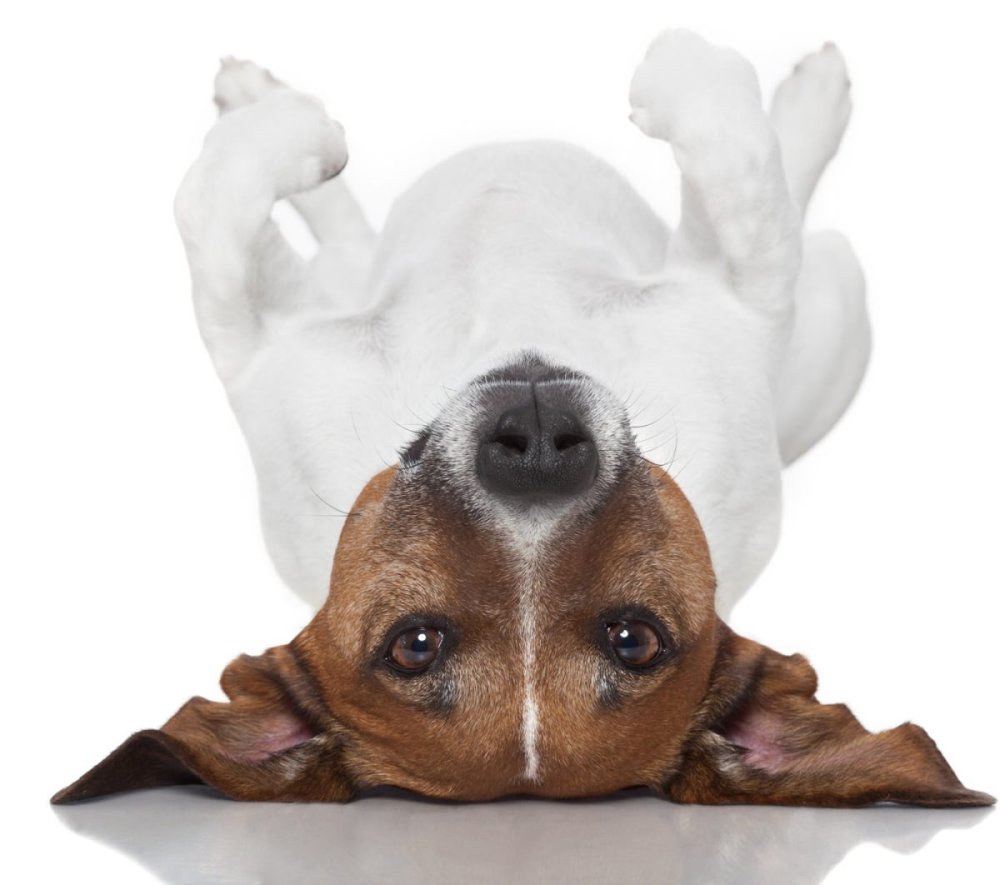
If you go one step further and your dog is happy and feeling playful, the ears are fully perked, bright eyes greet you with a rapidly wagging tail. Your friend may jump around and offer you a tummy to rub or a stick to throw. If you just got home after working all day, he may be so happy that he will wiggle from his nose to his toes.
The Submissive Dog
When being submissive the dog may also roll over and offer its tummy, but the rest of his expressiveness is not relaxed, He does not wiggle happily, but tuck his tail, and lays still to be evaluated by the other dog or a person that he perceives may be a threat. This dog will not look directly at the possible threat, he just wants to communicate that he doesn’t want any trouble and is hoping the other dog is going to be friendly.
The Anxious Dog
A nervous dog will shoe their anxiety by having a tense stance and laying the ears back near the head. The tail may be tucked close to the body, and the dog may try to avoid eye contact or roll their eyes to one side showing an unusual amount of the white of the eye. The dog may whimper, repeatedly lick the lips, or yawn. The yawning is a reflex that increases the oxygen flow and gets them ready for action in case there really is a danger.
The dog that is having anxiety can easily become fearful. At this point the ears are flat against the head, and the stance is very low to the ground. They may whine, or growl and bare their teeth. If approaching the panic state, they may also lose control of their bowels or bladder. Try to get the animal to a comforting location, but don’t try to sooth or reprimand the dog at this point. A fearful dog can become suddenly aggressive.
The Alpha Dog
A dominate, or alpha dog will try to be assertive with other dogs. If both dogs are alphas, it is likely there will be a fight is the owner is not controlling the animals. If one dog is submissive, there shouldn’t be a problem. The dominate dog will make direct eye contact and stand at attention, leaning somewhat forward. Ears are perked up, and the hair on the shoulders may be standing up.
A dog that behaves this way toward people may have to attend behavior modification classes with the owner in attendance, as this dog can become dangerous.
The Aggressive Dog
If you are dealing with an aggressive dog, the ears are back flat against the head, all muscles are tensed, and the dog is leaning decidedly forward. Sometimes they wag their tail, but this is not a friendly gesture. The hair on its back may be bristled, teeth will be bared, and the dog will be growling in a threatening manner. It’s best not to make eye contact with the animal and move slowly away form the dog. Try not to show fear, don’t turn you back on the dog, and never run.
Aggressive dogs should not be selected for breeding, and the owner will need an experienced trainer to help with behavior modification in this type of animal.
Signs of Ill Health
If your dogs behavior changes over time or suddenly, make a trip to the vet and have him checked immediately. In the wild signs of illness or injury can mean certain death by predators. So your dog may not show symptoms until the late stages of a disease process. Your best clue that something is amiss is behavioral changes.
If your active dog becomes disinterested in things he used to love don’t assume that it’s because he’s getting older, or outgrowing the puppy stage. If your dog has always been mild mannered and suddenly becomes ill tempered and “nippy”, have a vet check before you decide to go to behavior modification classes.
Your dog could be sick or in pain and the only way he can tell you is through body language and behaviour.
Leave A Comment